






Contents:
- Why the Cost of a Keratin Treatment Matters More Than the Headline Price
- The Basics: What a Keratin Treatment Is
- What Happens at the Appointment
- Typical Keratin Treatment Cost in London in 2026
- What Changes the Price: The Intermediate Level
- Hair Length and Thickness
- Product Brand and Formula
- Stylist Experience
- Salon Location
- Add-Ons and Pre-Treatments
- Advanced Nuances That Affect Value
- Previously Coloured or Bleached Hair
- Extensions and Keratin Treatments
- Frequency and Maintenance
- Cost Over a Year
- Keratin Treatment vs Brazilian Blow-Dry: A Commonly Confused Pair
- Safety, Ingredients and Why Cheap Can Cost More
- Is a Keratin Treatment Worth It for Busy Households?
- The First Week After Treatment: What to Expect
- Days 1 to 3
- Days 4 to 7
- Weeks 2 to 12
- Who Should Think Twice
- Reading a Price List Like an Insider
- Common Mistakes to Avoid
- How to Compare Quotes Fairly
- Ways to Keep the Cost Down Without Cutting Quality
- Planning the Booking Around Real Life
- Frequently Asked Questions
- How much does a keratin treatment cost in London on average?
- How long does a keratin treatment last?
- Can I get a keratin treatment if I have hair extensions?
- Is a keratin treatment safe for young children’s hair or during pregnancy?
- What is the difference between a keratin treatment and keratin bond extensions?
It is 7.40 on a Tuesday morning, the humidity has turned your hair into a halo, and the straighteners have been on for twenty minutes. By the time the school run or the commute begins, the smooth finish is already gone. That daily battle is the reason so many Londoners look into a keratin treatment, and the first question is always the same: what does it actually cost, and why does one salon quote £150 while another quotes £450?
This guide answers that question in plain terms. It covers the typical keratin treatment cost in London in 2026, the factors that move the price up or down, how to compare quotes fairly, and the mistakes that lead people to pay twice. It is written for busy people, whether that means a young family juggling nursery drop-offs or a young professional with a packed calendar, who want a clear picture before they book.
Why the Cost of a Keratin Treatment Matters More Than the Headline Price
A keratin treatment is not a one-off purchase in the way a haircut is. It is a smoothing service that lasts roughly three to five months and then fades, which means the true price is the cost per month of smooth hair, plus the cost of aftercare, plus the cost of any repair if something goes wrong. A £120 treatment that fades in six weeks is more expensive than a £280 treatment that holds for four months.
For a household budget, this reframing helps. Divide the total price by the number of months of good results, and the comparison between salons becomes a lot clearer.
The Basics: What a Keratin Treatment Is
Despite the name, a keratin treatment does not simply add protein to your hair. A smoothing solution containing keratin and a bonding agent is applied to the hair, left to absorb, dried, and then sealed with a flat iron at a high temperature. The heat locks the product around each strand, filling in rough spots on the cuticle and relaxing frizz. The hair is not chemically straightened in the way a relaxer works. Instead, curl and wave are loosened and softened, and the surface becomes smooth and shiny.
Results vary by hair type. Naturally wavy or frizzy hair usually sees the most dramatic change. Very curly or tightly coiled hair tends to become looser and more manageable rather than poker straight.
What Happens at the Appointment
- Consultation: the stylist checks the condition of the hair, discusses previous colouring or chemical services and chooses a formula.
- Wash: a clarifying shampoo removes oil and product so the treatment can penetrate.
- Application: the solution is applied in thin sections, usually avoiding the scalp.
- Processing: the hair is left to absorb the product for around 20 to 40 minutes.
- Blow-dry and seal: the hair is dried and flat-ironed in small sections.
- Finish: a light rinse or style, and aftercare instructions.
Appointments commonly take between two and a half and four hours, which matters if you are arranging childcare or taking time off work.
Typical Keratin Treatment Cost in London in 2026
Prices differ across the city. As a broad guide, based on typical London salon ranges, expect the following. These are indicative market figures, not a quote from any particular business.
- Short hair (above the shoulder): roughly £150 to £250.
- Medium length (shoulder to mid-back): roughly £200 to £350.
- Long or very thick hair: roughly £300 to £500, and occasionally more in premium central salons.
- Budget or express smoothing services: from around £80 to £150, though these often use lighter formulas that last six to ten weeks.
For a current look at keratin treatment prices, it is always best to check a salon’s own listing, because formulas, hair length bands and consultation fees all change the final figure.
What Changes the Price: The Intermediate Level
Once the basics are clear, several factors explain why two quotes for the same service can differ by hundreds of pounds.
Hair Length and Thickness
More hair means more product and more time. Many salons price in length bands, but some charge by the amount of product used. A person with thick, long hair may use twice as much formula as someone with fine, shoulder-length hair, and the price reflects that.
Product Brand and Formula
Smoothing formulas range widely. Premium professional systems are formulated to deliver longer-lasting results with lower levels of restricted ingredients, and they cost the salon more per application. Cheaper products may be diluted or based on harsher chemistry. The brand name matters less than the safety documentation, so it is reasonable to ask which product is used and to look at its ingredient list.
Stylist Experience
A senior stylist or a specialist in smoothing treatments will charge more than a junior. That premium often pays for itself, since the sealing stage requires careful, even heat control. Uneven application can lead to patchy results that fade at different rates.
Salon Location
Rent in Mayfair, Kensington or Soho is higher than in outer boroughs, and prices follow. A keratin treatment in zones 5 and 6 can be 20 to 30 per cent cheaper than the same service in a prime central location, though travel time and the stylist’s experience should be weighed against that saving.
Add-Ons and Pre-Treatments
Colour correction, a cut, a deep-conditioning mask or a clarifying pre-treatment can all be added to the bill. Some salons build these into the base price, others list them separately. Always ask whether a trim and aftercare shampoo are included.
What the Pros Know: Ask for a written quote that states the formula name, the hair length band and the total including any consultation fee. Salons that quote clearly in advance are usually the ones with the fewest disputes afterwards, and the quote gives you something to compare line by line against other salons.
Advanced Nuances That Affect Value
Previously Coloured or Bleached Hair
Hair that has been lightened is more porous and can react unpredictably to smoothing products. A careful stylist will test a small section first and may recommend waiting a couple of weeks between a colour service and a keratin treatment. Some salons add a surcharge or ask for a separate patch test. Ignoring this advice can lead to brittle, over-processed hair that needs expensive repair.
Extensions and Keratin Treatments
Anyone wearing bonded extensions needs to check compatibility before booking. Smoothing products can soften the keratin bonds and cause slippage, and heat on the bond area is risky. A specialist such as Ivana Farisei, who works with extensions every day, will normally advise keeping any smoothing product away from the bonds or scheduling the treatment around a refit. The cost of a mistake here is not only the treatment itself but also the repair or replacement of the extensions.
Frequency and Maintenance
Repeating the treatment too often can build up product on the hair and cause stiffness. Most professionals suggest waiting at least three to four months between sessions. Using sulphate-free shampoo and avoiding clarifying products prolongs the effect and spaces out repeat visits, which lowers the annual cost.
Cost Over a Year
A realistic annual picture for medium-length hair looks like this:
- Three treatments at roughly £250 each: £750.
- Sulphate-free shampoo and conditioner: £120 to £200.
- A silk pillowcase and occasional mask: £40 to £80.
The total comes to around £900 to £1,050, or roughly £75 to £90 a month. For people who currently spend 30 to 40 minutes a day blow-drying and straightening, that daily time saving is often the main attraction, worth about 180 hours a year.
Keratin Treatment vs Brazilian Blow-Dry: A Commonly Confused Pair
The terms are often used as if they mean the same thing, and some salons use them interchangeably. There are real differences worth knowing before you compare prices.
- Keratin treatment: aims to smooth and condition, with results that last around three to five months. It softens frizz and reduces curl without fully straightening.
- Brazilian blow-dry: usually a lighter, shorter-lasting service of around eight to twelve weeks, designed mainly to control frizz and add shine. It is often a little cheaper.
- Chemical relaxer: a different process entirely, which permanently changes the hair structure and grows out over time. It does not wash out.
If a quote looks suspiciously low, check which of these services is actually being offered. A cheap Brazilian blow-dry priced as a keratin treatment is one of the most common sources of disappointment.
Safety, Ingredients and Why Cheap Can Cost More
Formaldehyde has been the most debated ingredient in smoothing treatments for years. It is tightly restricted in cosmetic products in the UK, and some formulas release it when heated, which is why ventilation and good practice matter. Many modern professional systems are formulated to avoid or minimise it, but labels can be vague. Ask the stylist which product is used, request the safety data sheet, and make sure the salon is well ventilated during the heat stage.
Cutting corners on safety can have consequences, including scalp irritation, eye discomfort and hair that breaks off at the root. In that sense, a very low price can end up costing far more than a mid-range one.
Is a Keratin Treatment Worth It for Busy Households?
The honest answer depends on how much time hair currently takes. A parent who spends ten minutes each morning wrestling frizz before nursery drop-off may find the treatment transforms the routine. A young professional who washes and air-dries and rarely uses heat may notice less of a difference. A simple test is to count the minutes. If you currently spend 25 minutes or more a day on blow-drying and straightening, the maths usually works in favour of the treatment, because it can cut that to five or ten minutes for several months.
Other benefits are less obvious. Smoother hair tangles less, which matters for anyone with long hair who also cares for small children, since a ponytail pulled by tiny fingers is much less painful when the hair is not matted. Hair also tends to look neater after exercise, a commute on the Tube or a rainy walk to the station.
The First Week After Treatment: What to Expect
The days after the appointment decide how well the result lasts, so it is worth planning around them.
Days 1 to 3
Most professional systems ask you to keep the hair dry, loose and untucked. No tying back, no clips behind the ears, and no washing. A hair tie can leave a permanent bend or crease in the smoothed hair. Parents who need a ponytail for work or childcare reasons should discuss this with the stylist beforehand, as some modern formulas relax these rules.
Days 4 to 7
The hair can now be washed with a sulphate-free shampoo. Blow-dry on a medium setting or air dry, and avoid applying heat to the same section repeatedly. A light leave-in cream helps keep the surface smooth.
Weeks 2 to 12
Results settle into their long-term pattern. Frizz gradually returns, first at the roots and ends, and styling time creeps up again. When the effect has faded to the point where daily styling feels like before, it is time to think about the next appointment.
Who Should Think Twice
A keratin treatment is not for everyone. People with very damaged, over-bleached or chemically relaxed hair may find the heat stage too harsh. Those with sensitive scalps or respiratory conditions such as asthma should discuss ventilation and product choice first. And anyone wearing bonded extensions, as mentioned earlier, needs a plan to protect them.
For clients who want smoother hair and more volume together, many specialists suggest treating the two goals separately. At Ivana Farisei, the sensible order of services is usually to settle the smoothing question first and book extensions or a refit afterwards, so the bonds are never exposed to smoothing product. That scheduling detail rarely appears in price lists, yet it can save a great deal of money.
Reading a Price List Like an Insider
Price lists in London salons often look similar but hide differences. A few details are worth checking line by line.
- “From” pricing: a figure that begins with “from” is the minimum for the shortest hair. The final price for you could be double.
- Stylist level: many salons list two or three tiers, such as stylist, senior stylist and creative director. The difference can be £30 to £80 for the same service.
- Consultation fee: some salons charge £20 to £30, refundable when you book. Others do it free.
- Re-treatment guarantee: a salon that offers a free touch-up within two weeks if the result is uneven is confident in its work.
A transparent list is a sign that the business has nothing to hide. Where a salon such as Ivana Farisei publishes its keratin information openly, you can see what is covered before making contact, and that clarity should be the standard you look for elsewhere too.
Common Mistakes to Avoid
- Choosing purely on price. Some providers advertise rock-bottom rates by using diluted product or skipping the consultation. The result fades quickly and the hair can feel coated.
- Skipping the patch or strand test. Hair that has been bleached, tinted or relaxed needs a test section first.
- Washing too soon. Many formulas need 48 to 72 hours before shampooing or tying the hair back. Rushing this stage shortens results.
- Using the wrong shampoo. Sulphates strip the treatment, so standard supermarket shampoos can cut its lifespan in half.
- Not asking about hidden extras. A separate charge for a trim, a toner or the aftercare kit can add £30 to £80.
- Booking right before an event without a trial. The first few days can look different from the final result, so avoid scheduling a treatment the day before a wedding or interview.
How to Compare Quotes Fairly
Collect at least three quotes and compare them using the same checklist.
- Which product or system is used, and is the safety sheet available?
- What hair length band does the quote cover?
- How long should the result last?
- Is a consultation, trim or aftercare kit included?
- What happens if the result is patchy? Is there a free correction window?
- How much experience does the person doing the service have with smoothing treatments?
Salons that answer these clearly, and in writing, tend to charge for what they actually deliver. At Ivana Farisei, for instance, the pricing page sets out what each service includes, which makes it simple to compare against other quotes before you commit.
Ways to Keep the Cost Down Without Cutting Quality
- Book mid-week and mid-morning, when some salons offer lower rates or have more flexibility.
- Ask about package pricing if you also need a cut or colour.
- Extend the life of the treatment with sulphate-free products, so you rebook less often.
- Avoid daily heat styling, which erodes the smoothing effect.
- Ask about a model or training-day rate, where available, and only if the person doing the work is supervised by an experienced stylist.
Planning the Booking Around Real Life
Timing can save as much money as shopping around. A treatment booked for a quiet fortnight, with no weddings, holidays or swimming trips in the first few days, tends to last longer than one squeezed in between obligations. Families with school holidays to plan around often find that booking in the last week of term lets the first three days of no-washing pass while the children are still in class.
For young professionals, the best slot is usually a Friday afternoon or a Saturday morning. The no-tie, no-wash rule then covers the weekend, and by Monday the hair is ready for the office. If you need to travel in the first week, pack a silk scarf, a sulphate-free travel shampoo and a wide-tooth comb, and avoid chlorinated pools and sea water until the stylist says it is safe.
Finally, keep a note of the product name and the date of treatment. If you later visit a colourist or an extension specialist such as Ivana Farisei, that single line of information helps them judge how your hair will respond and whether any other service should be delayed. It costs nothing and makes every future decision cheaper.
Frequently Asked Questions
How much does a keratin treatment cost in London on average?
Most London salons charge between about £150 and £500, with £200 to £350 typical for medium-length hair. Central locations, long hair and premium products sit at the upper end.
How long does a keratin treatment last?
Typically three to five months, depending on hair type, the product used and how well you look after it. Hair washed frequently with sulphate shampoos usually loses the effect sooner.
Can I get a keratin treatment if I have hair extensions?
It is possible, but it needs planning. Smoothing products and high heat can weaken bonds, so speak to your extension specialist first and consider timing the treatment around a refit.
Is a keratin treatment safe for young children’s hair or during pregnancy?
Most professionals advise against it for children, and many recommend waiting during pregnancy or breastfeeding as a precaution. Always speak to a doctor or a qualified stylist before booking if either applies.
What is the difference between a keratin treatment and keratin bond extensions?
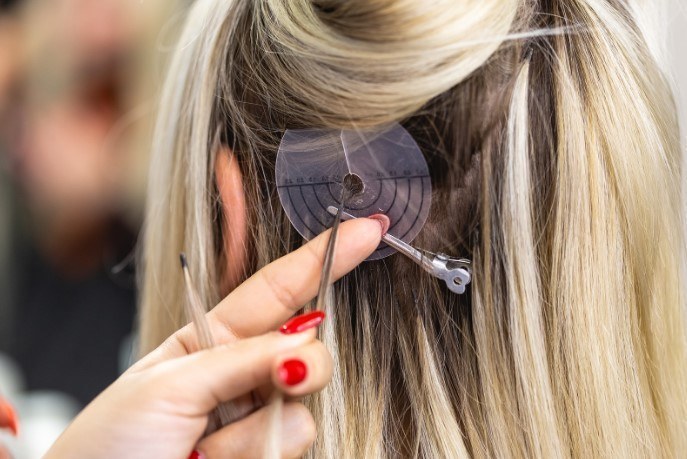
They are unrelated services that share the word keratin. A keratin treatment smooths your own hair. Keratin bond extensions attach additional strands to your hair using small keratin bonds.
