






Contents:
- What Floor Leveling Actually Means for Outdoor Porcelain Tile
- Self-Leveling Compounds vs. Mortar Bed Leveling
- Why Skipping This Step Wrecks Outdoor Installations Specifically
- Thermal Movement Makes Substrate Prep Non-Negotiable
- What the Pros Know
- How Tampa Bay Floors Approaches Leveling Before Outdoor Tile Goes Down
- Real Project Example: A Clearwater Pool Deck Rebuild
- Seasonal Timeline: When to Level and Tile in Tampa Bay
- Quick Cost Breakdown: What Leveling Adds to an Outdoor Tile Budget
- Practical Tips Before Hiring an Outdoor Tile Crew
- Ask to See the Elevation Survey
- Confirm the Slope Direction
- Don’t Let Weather Rush the Cure Time
- Check for Drainage Around Pool Coping
- FAQ: Floor Leveling and Outdoor Porcelain Tile
- Can I skip leveling if my existing slab looks pretty flat?
- How long does floor leveling take for an average pool deck?
- Does leveling affect how the finished tile looks?
- Is self-leveling compound waterproof on its own outdoors?
- Why does leveling cost vary so much between quotes?
- Getting the Foundation Right the First Time
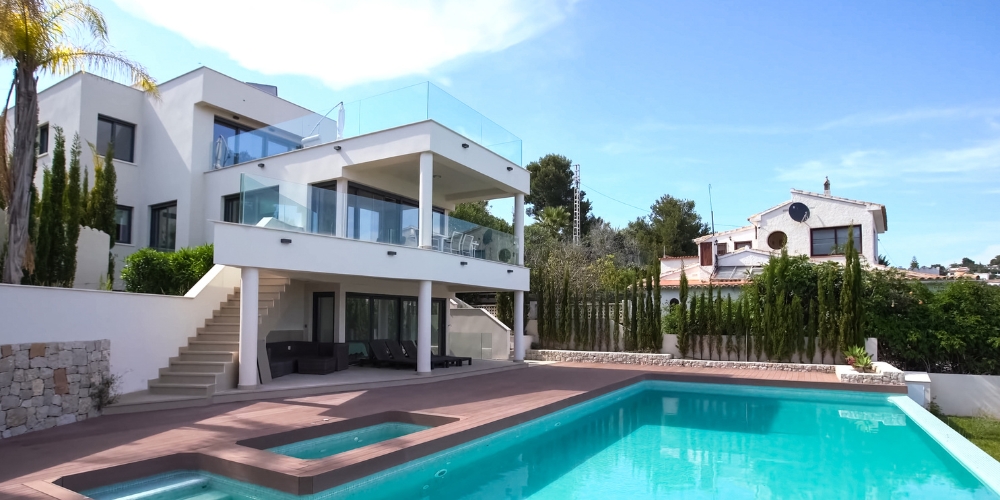
A porcelain tile patio can crack within its first Florida summer if the concrete underneath it was never leveled. Not because the tile was cheap, not because the installer rushed the grout lines, but because nobody addressed the quarter-inch dip near the pool coping before the first tile ever touched adhesive. That’s the uncomfortable truth about outdoor tile failures in the Tampa Bay area: most of them start below the surface, weeks or months before anyone notices a hollow-sounding tile or a hairline crack creeping across a corner. Floor leveling isn’t a nice-to-have step tucked into the fine print of an installation quote. It’s the difference between a patio that survives fifteen Florida hurricane seasons and one that needs partial replacement before the first year is over.
This matters more outdoors than almost anywhere else in a home. Interior floors sit in climate-controlled rooms with steady temperatures and no direct rain exposure. Outdoor slabs around pools, lanais, and patios in Pinellas, Hillsborough, and Pasco counties deal with intense UV heat, sudden downpours, and the kind of humidity swings that make concrete expand and contract more than most homeowners realize. When that slab isn’t properly leveled and sloped before porcelain goes down, every one of those stresses gets concentrated on the tile and grout joints instead of being absorbed by a properly prepared substrate.
What Floor Leveling Actually Means for Outdoor Porcelain Tile
Floor leveling is the process of correcting elevation differences in a concrete slab or existing surface before new flooring goes on top. For outdoor porcelain tile specifically, it involves two distinct but related goals: making the surface flat enough that large-format tiles sit without rocking, and making sure water has somewhere to go. A perfectly flat slab with zero slope toward a drain is almost as problematic as an uneven one, because standing water sitting under or around porcelain tile for hours after every rainstorm accelerates efflorescence, freeze-thaw-like stress (yes, it happens in Florida too, just from moisture cycling rather than ice), and grout deterioration.
Most existing concrete patios and pool decks in this region were poured decades ago, often with tolerances that were fine for a broom finish or old-style pavers but are nowhere near tight enough for large-format porcelain, which is typically 24×24 inches or bigger and shows every imperfection in the substrate. Industry standards for tile-ready substrates call for no more than 1/8-inch variation over a 10-foot span. A lot of older Tampa Bay slabs are off by a half-inch or more in spots, especially near expansion joints, pool equipment pads, and areas where tree roots have shifted the ground beneath.
Self-Leveling Compounds vs. Mortar Bed Leveling
Two main methods get used outdoors. Self-leveling underlayment (SLU) is a cementitious, flowable compound poured over the slab that finds its own level within minutes, ideal for moderate dips and large open areas like pool decks. Mortar bed leveling, sometimes called a mud bed, is a thicker, hand-troweled build-up used when the elevation change is more severe or when a specific slope needs to be engineered by hand, such as directing water away from a home’s foundation toward a yard drain. A skilled crew often uses both in the same project: SLU for broad flat correction, mortar in targeted zones near steps, thresholds, or drains.
Why Skipping This Step Wrecks Outdoor Installations Specifically
Indoor tile that’s slightly uneven might just feel a little off underfoot. Outdoor tile that’s uneven becomes a genuine liability. Lippage, where one tile edge sits higher than its neighbor, creates a tripping hazard on a wet pool deck that insurance adjusters take very seriously after a fall. It also creates pooling pockets that never fully dry between Tampa’s near-daily summer storms, which breeds algae and turns a pristine deck slick and green within a season.
There’s also the adhesive problem. Large-format porcelain requires close to full mortar coverage on the back of the tile to perform outdoors, generally 95 percent or more in wet or freeze-prone areas per most manufacturer specs. When a slab has dips and humps, the installer either has to use excessive mortar to compensate, which can trap moisture and cause hollow spots, or the tile sits on high points with voids underneath. Those voids are where cracks start, because porcelain, for all its hardness, is brittle under point-load stress. Step on a hollow spot with a pool chair leg or a heavy grill, and something eventually gives.
Thermal Movement Makes Substrate Prep Non-Negotiable
Outdoor porcelain in West Central Florida experiences surface temperature swings that indoor tile never sees, sometimes 40 degrees or more between a cool morning and a slab baking in direct August sun. That thermal cycling causes expansion and contraction in both the tile and the substrate beneath it. If the substrate isn’t uniformly bonded and level, that movement concentrates stress at the weak points instead of distributing evenly, which is exactly how you end up with cracked tiles radiating out from a single low spot two summers after installation.
What the Pros Know
What the Pros Know: Before ever mixing a bag of self-leveler, an experienced crew maps the entire slab with a laser level and marks every high and low point in chalk, not just the obviously sloped areas. Homeowners rarely see this step because it happens before any tile arrives on site, but it’s the single biggest predictor of whether a porcelain installation lasts five years or twenty-five. A rushed leveling job skips the mapping and just “eyeballs” the pour, which is how you get a deck that looks fine on installation day and starts showing lippage within eighteen months.
How Tampa Bay Floors Approaches Leveling Before Outdoor Tile Goes Down
Tampa Bay Floors treats leveling as its own dedicated phase of the project rather than a rushed prep step squeezed in before the fun part starts. Every outdoor job begins with a slab assessment using a laser level and a 10-foot straightedge to document elevation changes across the full footprint, not just a handful of spot checks. That data determines whether the job calls for self-leveling underlayment, a hand-troweled mortar bed, or, in the case of severely deteriorated concrete, partial slab replacement before any tile work begins. This is the same discipline the crew brings to every category of flooring installation services the company offers, indoors and out.
What sets the approach apart on outdoor projects specifically is the slope engineering. Tampa Bay Floors doesn’t just flatten a slab; the team builds in a calculated pitch, typically a quarter-inch per foot, directing water toward existing drains or safely away from the home’s foundation and pool structure. That’s a detail a lot of general contractors miss because it requires understanding both the tile trade and basic outdoor drainage principles at the same time. Getting the pitch wrong in either direction, too flat or too steep, creates problems just as real as skipping leveling altogether. The company’s floor leveling services are built around solving that exact intersection of flatness and drainage before a single tile is set.
Because so much of Tampa Bay Floors’ outdoor work happens around pools, lanais, and screened patios, the crew has developed a specific rhythm for coping stones, pool decks, and transition zones where porcelain meets existing pavers or coping. Those transitions are notorious failure points on jobs where leveling was treated as an afterthought, because even a slight mismatch in elevation at a seam becomes a tripping hazard right at the edge of a pool. As the region’s dedicated outdoor porcelain tile installers, the team builds those transitions with the same laser-checked tolerances used across the rest of the deck, not a looser standard just because it’s “outside.”
Real Project Example: A Clearwater Pool Deck Rebuild
A homeowner in Clearwater came to Tampa Bay Floors after a previous installer’s pool deck started cracking in three separate spots within two years, all clustered around a section where the original 1990s concrete had settled unevenly near the equipment pad. The old porcelain had been laid directly over the uneven slab with thin-set alone, no leveling compound, no slope correction. Water had been pooling in that low section after every rain, and the constant wet-dry cycling combined with thermal stress had turned three tiles into spiderwebs of cracks.
Tampa Bay Floors removed the failed section, mapped the full slab elevation, and found a 3/4-inch variance across roughly 200 square feet, well outside acceptable tolerance for large-format tile. The crew used a combination of mortar bed build-up near the equipment pad and self-leveling compound across the flatter sections, engineering a consistent slope toward the yard’s existing drain line. The new porcelain went down over that corrected substrate with full mortar coverage, and eighteen months later there’s been no cracking, no lippage, and no pooling water, even through two active hurricane seasons.
Seasonal Timeline: When to Level and Tile in Tampa Bay
Outdoor tile projects in this region are highly weather-dependent, and timing the leveling phase correctly matters almost as much as doing it well. Self-leveling compounds and mortar beds need dry, stable conditions to cure properly, which rules out large stretches of the summer rainy season for anything but carefully scheduled, tarped work.
- November through February: The prime window. Low humidity, minimal rain, and mild temperatures give leveling compounds and mortar the cleanest possible cure conditions, and porcelain can be set within days of leveling completion rather than waiting out weather delays.
- March through May: Still workable and increasingly popular, since homeowners want decks and lanais ready before peak pool season. Afternoon rain becomes more common toward May, so scheduling shifts to morning pours and leveling work.
- June through September: The rainy season makes outdoor leveling trickier but not impossible. Experienced crews plan around daily storm patterns, working mornings and covering fresh leveling compound before afternoon downpours roll in. This is also hurricane season, so timelines build in buffer days.
- October: A secondary sweet spot as humidity starts dropping and storm frequency tapers off, often the best month for a fall pool deck refresh before the holiday season.
Booking leveling and tile work for the November to February window generally means faster project completion and fewer weather-related delays, which matters directly to a budget-conscious homeowner since delays translate into extended labor costs and, in some cases, remobilization fees.
Quick Cost Breakdown: What Leveling Adds to an Outdoor Tile Budget
Homeowners often assume leveling is an optional upsell. It’s closer to insurance against a full tile replacement two or three years down the road. Here’s a general sense of how the numbers typically break down for a mid-size outdoor project in the Tampa Bay area, understanding that exact pricing depends on slab condition and square footage:
- Self-leveling compound application: roughly $3 to $6 per square foot, depending on how much material is needed to correct elevation differences.
- Mortar bed leveling (targeted areas): roughly $6 to $10 per square foot for hand-troweled sections, typically used only where SLU alone won’t correct the problem.
- Minor slab repair (spalling, small cracks): often $200 to $600 per repair area before leveling begins.
- Porcelain tile installation itself: commonly $12 to $25 per square foot installed outdoors, depending on tile size, pattern complexity, and whether it’s a pool deck versus a simpler patio.
On a 400-square-foot pool deck, that might mean an additional $1,200 to $2,400 dedicated purely to leveling and substrate correction, layered into a total project cost that could otherwise run $6,000 to $12,000 for the tile work alone. It sounds like a meaningful add-on until you compare it to the cost of tearing out cracked porcelain and starting over, which routinely runs double the original installation price once demolition, disposal, and re-leveling are all factored back in. Spending the money upfront on proper leveling is, dollar for dollar, one of the better investments in the entire project.
Practical Tips Before Hiring an Outdoor Tile Crew
Ask to See the Elevation Survey
A contractor who takes leveling seriously will have actual measurements, not a verbal guess. If a company can’t show a straightedge or laser level result before quoting the job, that’s a sign leveling might get skipped or minimized once work begins.
Confirm the Slope Direction
Water needs somewhere specific to go. Ask exactly where the slab will drain toward and how that connects to existing yard drainage or the home’s foundation grading. A deck that slopes toward the house instead of away from it creates a much bigger problem than uneven tile.
Don’t Let Weather Rush the Cure Time
Self-leveling compounds and mortar beds need adequate cure time before tile installation starts, often 24 to 72 hours depending on the product and humidity. A crew racing to finish before a forecasted storm might set tile too early, trapping moisture and weakening the bond.
Check for Drainage Around Pool Coping
Transition points near pool coping and steps are the most common spots for both leveling failures and safety hazards. Ask specifically how those zones will be handled, since a generic “we’ll level it all the same” answer often means those tricky transitions get less attention than they need.
FAQ: Floor Leveling and Outdoor Porcelain Tile
Can I skip leveling if my existing slab looks pretty flat?
Visual flatness is deceiving. Slabs can look even to the eye while varying by a half-inch or more across a 10-foot span, which is enough to cause lippage and hollow spots under large-format porcelain. A laser level check takes less than an hour and removes the guesswork entirely.
How long does floor leveling take for an average pool deck?
For most residential pool decks, self-leveling compound application and cure time run about two to four days before tile installation can begin, with targeted mortar bed areas sometimes adding another day or two depending on how much correction is needed.
Does leveling affect how the finished tile looks?
Not the color or pattern, but it dramatically affects the finished flatness and how light reflects across the surface. Uneven substrates create visible shadow lines at tile edges even when the grout joints are perfectly consistent, something a lot of homeowners notice after the fact and mistake for a tile quality issue rather than a substrate problem.
Is self-leveling compound waterproof on its own outdoors?
No. Self-leveling compound corrects elevation but isn’t a standalone waterproofing layer. Outdoor installations typically need a separate waterproofing or crack-isolation membrane between the leveled substrate and the tile, especially in pool deck applications where water exposure is constant.
Why does leveling cost vary so much between quotes?
The spread usually comes down to how much correction the slab actually needs and whether a contractor is quoting a thorough elevation survey versus a rough estimate. A suspiciously low leveling price often means minimal product will be used or the assessment step is being skipped, which shows up later as cracking or pooling water.
Getting the Foundation Right the First Time
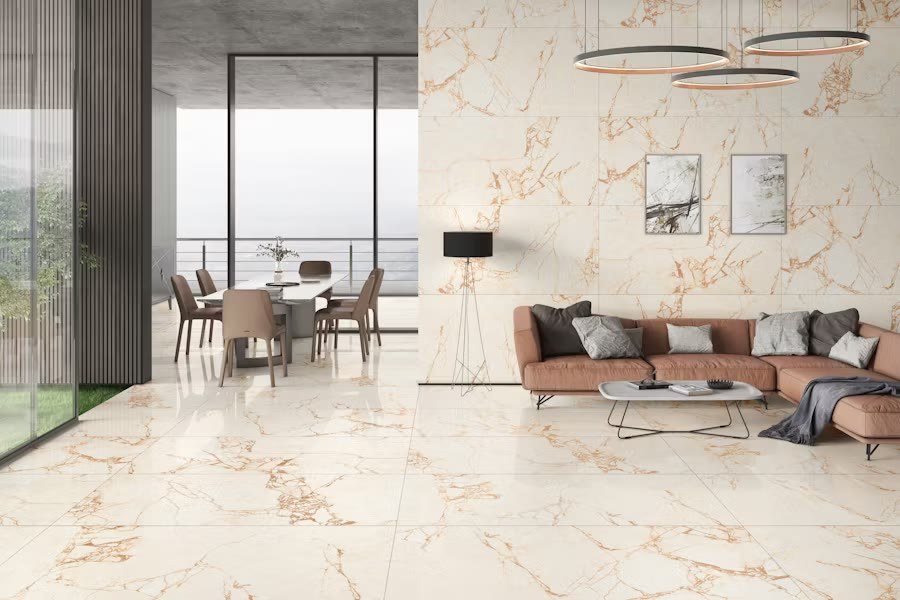
Porcelain tile itself gets most of the attention in outdoor renovation projects, the color, the texture, the size format. But the slab underneath is doing more work than any of those visible choices. Floor leveling is essential before outdoor porcelain tile installation precisely because it’s invisible once the job is finished, yet it determines almost everything about how that tile performs over the next decade of Florida heat, rain, and pool chemicals.
A homeowner weighing quotes for a pool deck or lanai should treat the leveling phase as a line item worth scrutinizing, not a place to cut corners looking for the lowest bid. The cheapest quote that skips a proper elevation survey and slope plan tends to become the most expensive project within a few years, once cracking, pooling, or lippage forces a redo. Tampa Bay Floors built its outdoor tile process around getting that foundation right from the first laser measurement to the final grout joint, and that’s the kind of groundwork that keeps a deck looking sharp long after the installation crew has packed up and gone home.
